
Directed bySamrat Parmar
I want to capture the irresistible urgency of being a fan. Across different lives and locations, the same “TACK” interrupts everyday routines and sends everyone chasing one thing: the game. The film builds through curiosity, escalating chaos, and collective celebration.
I’ve created this short, AI-generated visual exploration to bring selected moments from the build-up to life. It introduces the naturalistic world, restrained humour and growing urgency I imagine for the film: everyday routines interrupted by an instinct everyone seems to share.
The clip offers an early sense of framing, atmosphere and physical comedy. These ideas will develop further through the performances, sound design and final edit, building towards the baseball reveal and collective celebration.
An old man asleep. TACK. One eye opens. Silence. He closes it again. A louder TACK — he’s up, knows exactly what it is, and starts folding his futon.
An office worker heads home after a night shift. TACK. He grabs his phone — dead battery. Looks up into the crowd, then rushes end to end of the terminal to a platform gate.
A chef haggles with a tuna vendor at dawn. TACK. She shushes him. They both hear the next one. Even the vendor drops the tuna, and the two of them bolt.
A school kid leaves without his lunchbox, boards the bus, leg bouncing as if waiting for something. TACK — and every child on the bus is suddenly wide awake.
TACK. The customer bolts with half a haircut, cape still flapping. The stylist is left holding the scissors.
Two wrestlers locked mid-clash. TACK. They freeze, let go, and waddle-sprint out together.
The teacher hears the TACK mid-meditation. We cut to the students surfacing from theirs — only to find she has disappeared.
The office worker’s Suica card fails at the gate. He grabs the card from the person behind him, swipes, and runs through.
The kids stampede past their classroom, leaving the teacher stunned, and pile into the TV room.
The chef and tuna vendor burst into the nearest electronics store, mid-cleaning. They take the remote from the cleaner and change the channel.
The old man stretches dangerously from a ladder to adjust the dish on his roof. Inside, his TV shows only static.
The salon customer stands in the middle of Shibuya crossing — cape on, half a haircut — scanning for somewhere to watch.
The sumo wrestlers are wedged into a taxi’s back seat. They reach a bar — and the driver goes off duty to follow them in.
The yoga teacher hides from her students, watching on her phone. We cut back to the old man’s TV in Hokkaido — the static suddenly snaps to a baseball stadium.
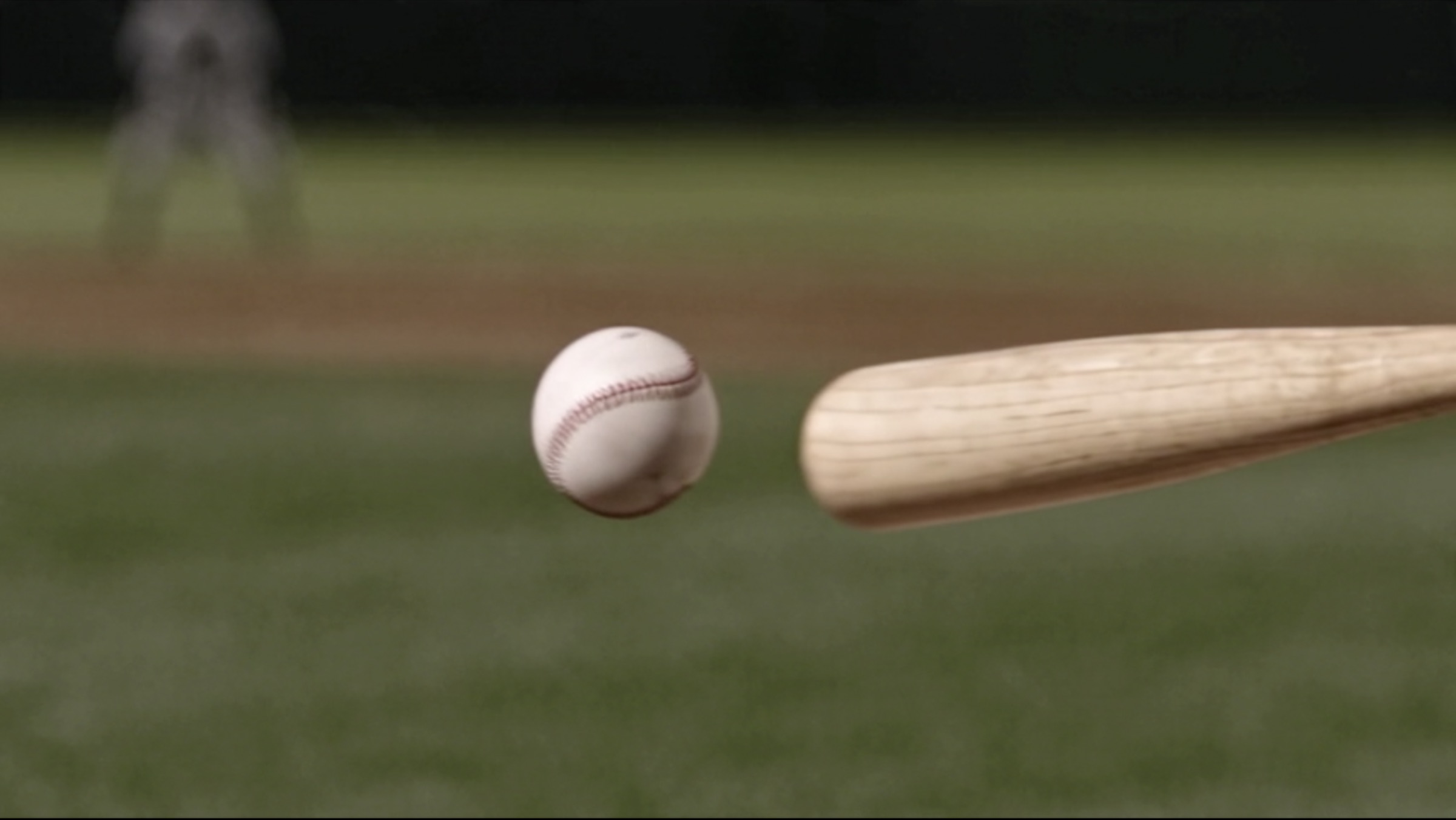
Close shot. A ball enters from the left of frame, a bat from the right. As they collide — for the first time, we see where the sound comes from.
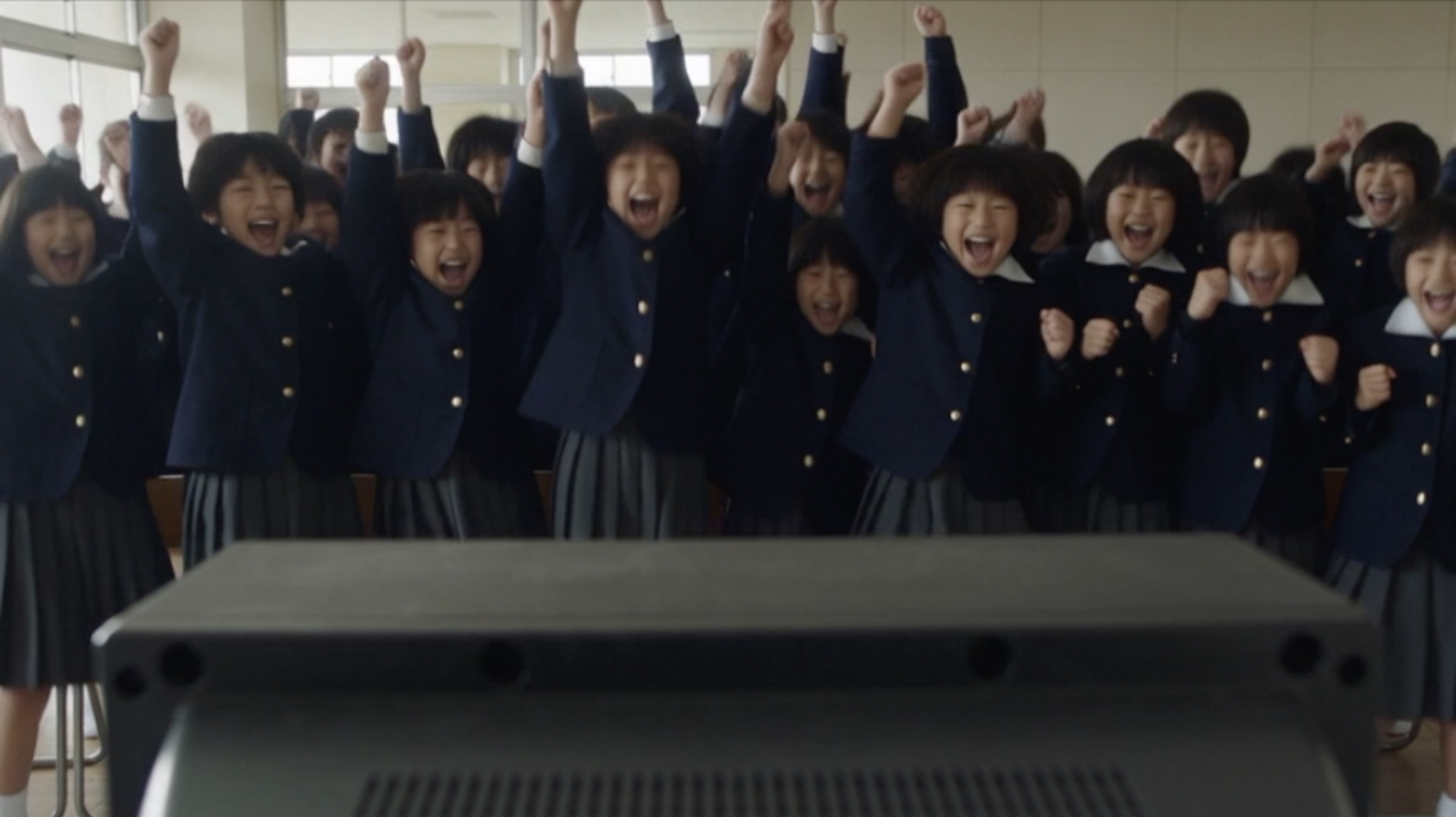
The kids and the whole faculty, packed into the school TV room.
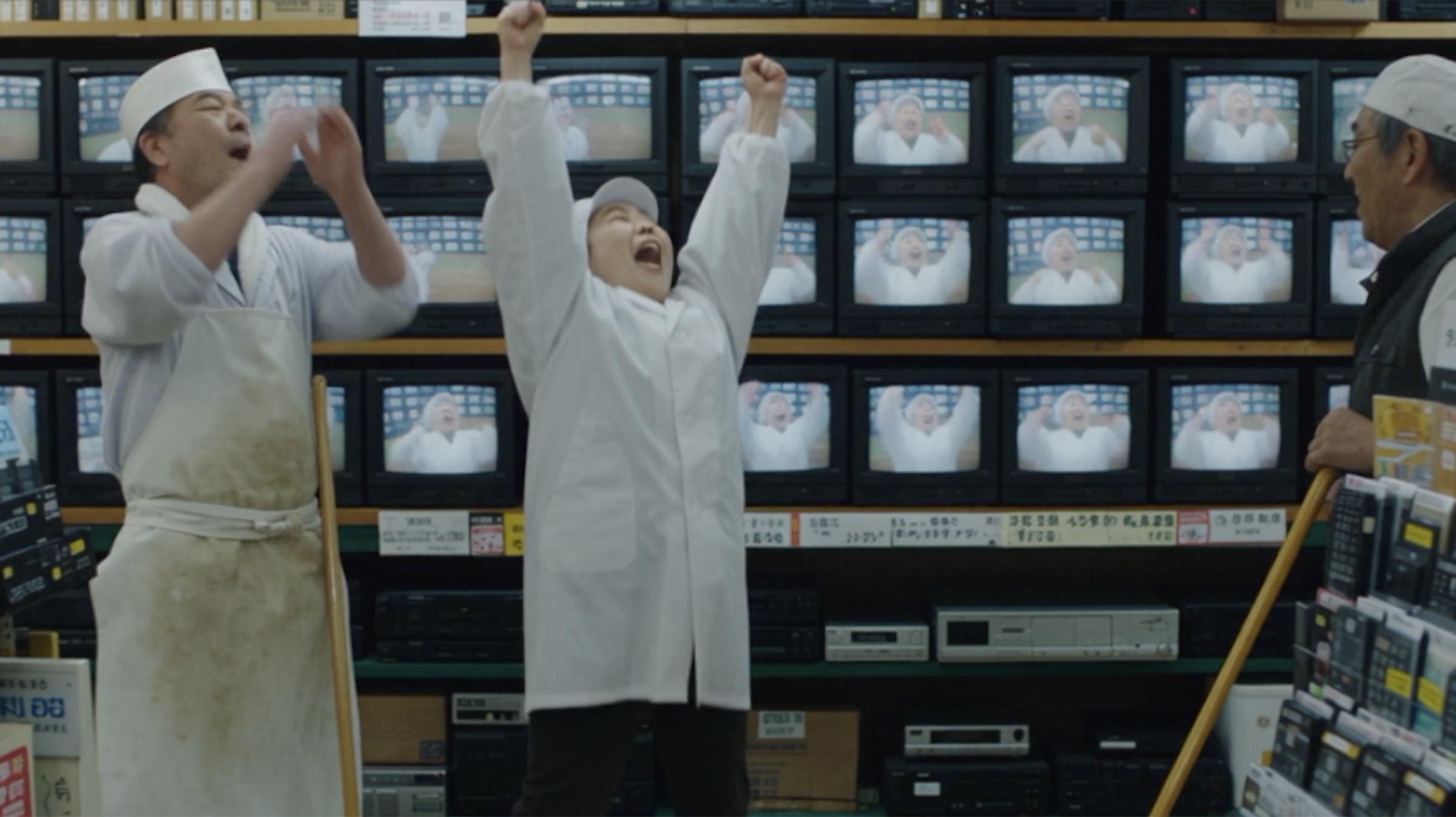
The chef and tuna vendor, cheering in the electronics store.
The old man in Hokkaido, fist in the air.
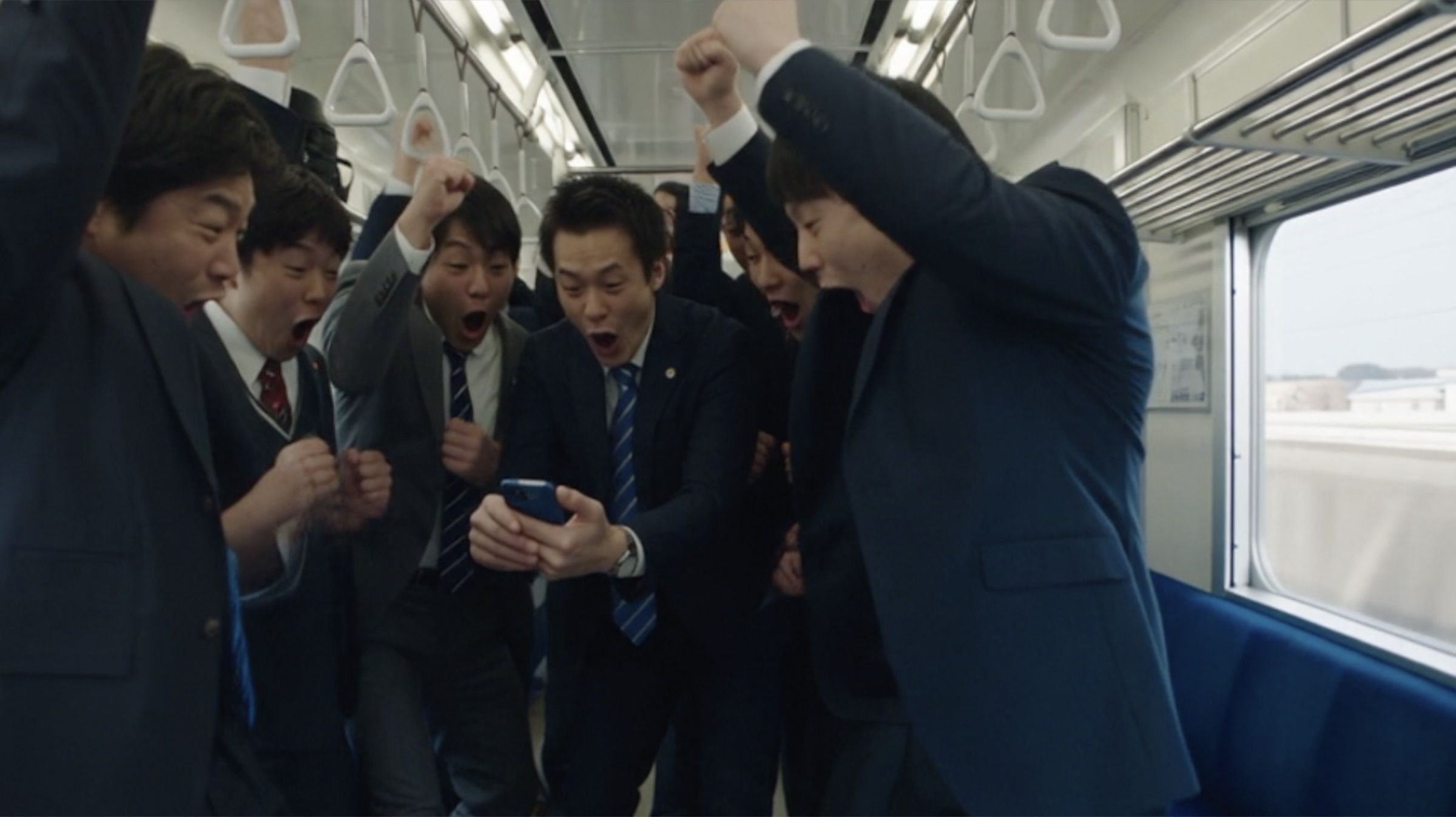
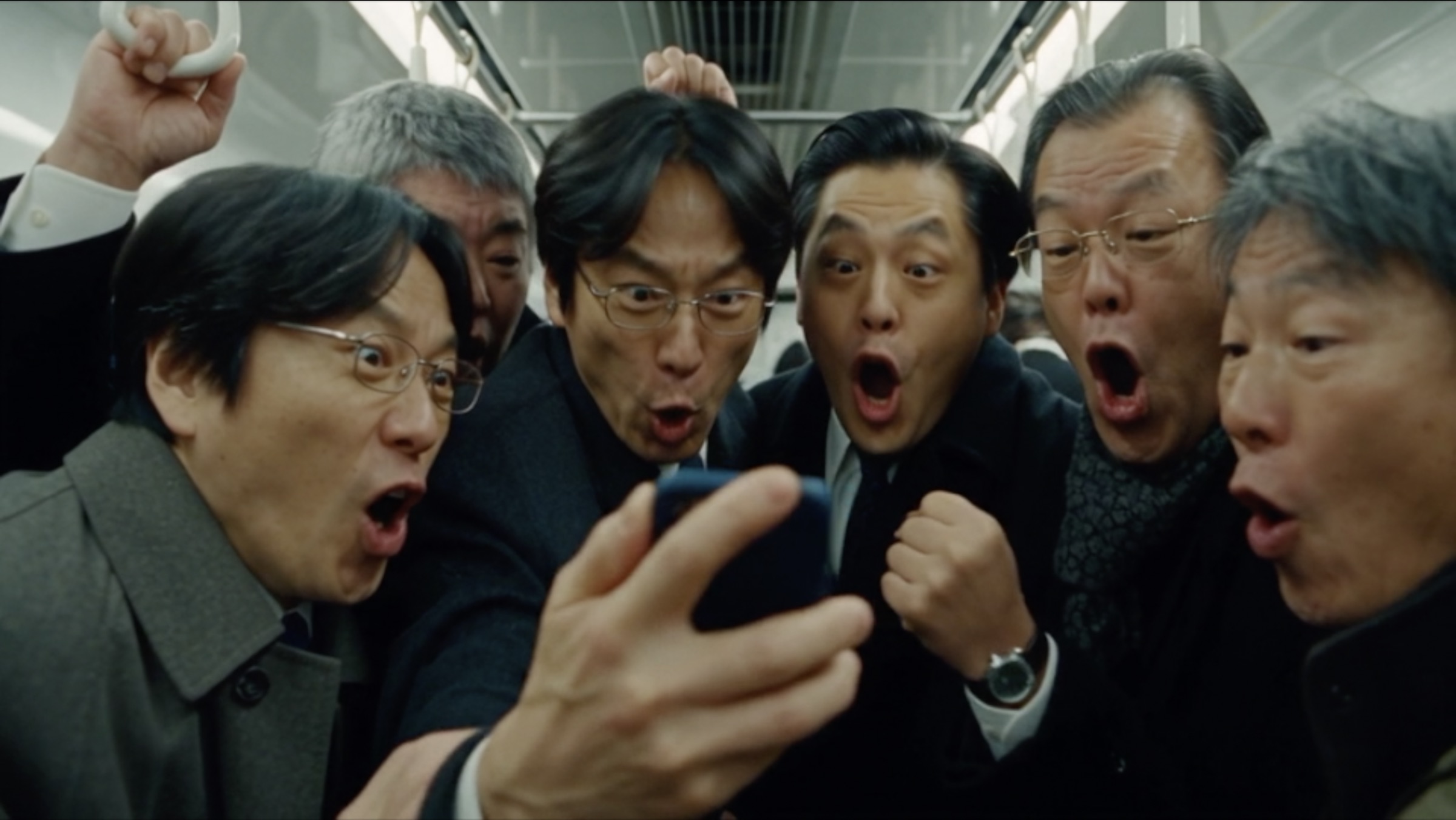
The office worker and strangers, huddled around one phone on the train.
The sumo wrestlers, stomach-bumping.
The yoga teacher yelling “YEAH!” — her students baffled.
The humour comes from how seriously our characters take their mission. Every reaction should feel instinctive and sincere.
I want restrained performances, precise reactions, and enough space for each situation’s absurdity to register.
Japan should feel contemporary, lived in, and specific. Each location gives its story its own character.
Natural light, tactile details, and expressive casting will keep the film grounded as the behaviour becomes increasingly outrageous.
We begin with stillness: a sleeping man, an opening eye, a pause. Once recognition strikes, the camera becomes more energetic, travelling with our characters through stations, streets, and corridors.
The edit gathers speed through intercut obstacles: a dead phone, a failed ticket gate, television static. Composed frames punctuate the rush, letting moments like the wrestlers squeezed into a taxi land clearly.
The “TACK” is our recurring signal. Crisp and instantly recognisable to the characters, it cuts through each environment while its source remains a mystery to the audience.
Everyday sounds and a percussive score build momentum. Then we strip everything back for the high-speed approach of ball and bat. Contact delivers the definitive TACK—and releases the stadium’s roar.
Celebration travels from the American stadium into every Japanese location. Strangers share a phone, faculty join the children, and the chef and vendor cheer together. Each reaction has its own personality, united by the same excitement.
The yoga teacher’s involuntary “YEAH!” and her students’ bewilderment give us one final comic beat before a clear, confident finish: